As we get set to depart on the Travel issue, let me mention a curious double-standard that pervades contemporary society—the image of the traveler versus the tourist. The one has a romantic mystique, a worldly, adventurous and altogether fascinating character. The other is denigrated as a shallow, photo-snapping simpleton from Somewhere USA. Yet every time we step out to "see the world", setting aside our normal routine to take on the role of a stranger, we are tourists.
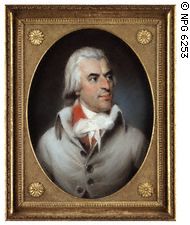
Many of the early travel writers—Xenephon, Marco Polo, Jonathan Carver—were journeying on business. But most of the best travel writers of our own time, such as Paul Theroux or the late Bruce Chatwin, are tourists, reporting from out-of-the-way corners of the globe that life, indeed, is elsewhere. Perhaps my favorite writer of travel is Arthur Young, an Eighteenth century English squire. An avid agriculturalist, Young went on several tours around the British Isles and France to observe farming and husbandry practices. Although his own farm experiments always ended in disaster, his travel diaries were highly successful, due to a quick eye and natural wit. In particular, Travels in France During the Years 1787, 1788, 1789 is a fascinating read, a vivid picture of a country on the edge of the abyss.
The first tour, in 1787, has entries not very different from what might be found in any travel notebook:
June 10th. Cross the Dordonne by a ferry; the boat well contrived for driving in at one end, and out at the other, without the abominable operation, common in England, of beating horses till they leap into them...
Pass Payrac, and meet many beggars, which we had not done before. All the country, girls and women, are without shoes or stockings.
On the 1788 tour his horse went blind, but he continued on quixotically, a farcical rider of the coming apocalypse:
I told M. de la Bourdonaye that his province of Bretagne seemed to me to have nothing in it but privileges and poverty; he smiled, and gave me some explanations that are important; but no nobleman can ever probe this even as it ought to be done, resulting as it does from the privileges going to themselves, and the poverty to the people.
But the 1789 tour is the reason why Arthur Young is still known today—at least to historians of the period. It happened to coincide with rather large historical events involving riots, guillotines, and regime change. He was in Paris at the outbreak of the revolution, when the National Assembly, meeting in a disused tennis court at Versailles, declared itself the rightful government of France: "June 20th. News!—News!—Every one stares at what every one might have expected." At that point Young, like any sensible Englishman, should have quitted the country. But, being a true-blooded traveler, he stubbornly continued the tour, while the revolution unfolded around him. "Many chateaus have been burnt, others plundered, the seigneurs hunted down like wild beasts, their wives and daughters ravished, their papers and titles burnt, and all their property destroyed..." Being aristocratic, and also suspiciously inspecting fields, Young’s life began to be in danger. In one episode at an inn he was woken up in the middle of the night:
...a file of twenty milice bourgeois, with their musquets, or swords, or sabres, or pikes, entered my chamber, surrounded my bed, and demanded my passport... They told me that I was undoubtedly a conspirator with the Queen... who had employed me as an arpenteu, to measure their fields, in order to double their taxes. My papers being in English saved me.
Fortunately for us he returned to his country manor house in one piece. Young was an ideal traveler, curious and open-minded, thoughtful and adventurous. Although righty critical of many things about France, he also found much to praise there—the vivacity of the French, for example, and the greater equality afforded to women. He is a key eyewitness to the French Revolution, and the conclusions he drew from the experience are still worth considering in our own century. Not bad for a simple tourist.
- Joel Van Valin