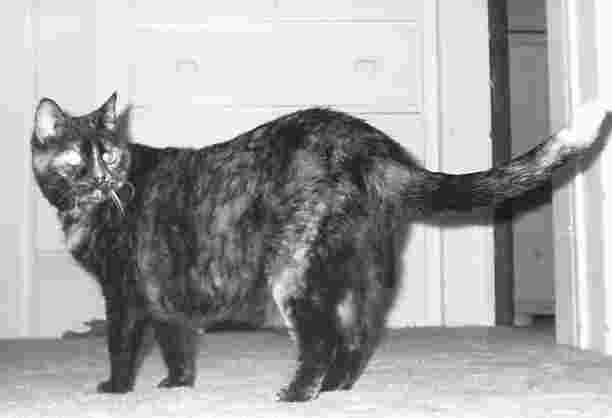
When one is asked why one has no friends and no social life to speak of, how is one to respond? It's really not very polite, but just as I returned home from the library, eager to begin my reading, Doris posed this most foul question.
My answer came quickly, though it took a moment to sink in once the words left my mouth: "I have no friends because most people I meet are just like you, shallow, boorish simpletons who would rather stand around chatting about why someone has no friends than actually being one."
The assertion was, of course, entirely without merit, since I do have friends, but some might say that referring to one's elderly spouse as a boorish simpleton speaks volumes of my lack of tact. I simply utter the truth when the truth arises and remain quiet the rest of the time. Those who would call me a friend are well aware of this and ask me questions only after bracing for an unequivocal dose of reality.
Doris often pursues me with questions about my social life, always asking about friends, social groups, church.
Friends want things.
They talk constantly about inane garbage just to stave off a silent moment at any cost. They call on the phone and drop by unannounced, not knowing when it's time to leave. It's easier to rid the kitchen of the smell of warm cheese than the cackling gaggle of hens she refers to as friends. I am missing nothing in my solitude. But, as is often the case, Doris insisted that we continue our conversation even in the face of logic.
"Well, this shallow simpleton might decide not to make dinner this evening. How would you feel about that?"
I gave my response some thought. I wanted to tell her straight away that I was perfectly capable of preparing my own meals but realized that there had to be some benefit to living in this Victorian mausoleum with Doris and her thirty-one cats, seven dogs, three birds, and iguana named Chuck.
"What would you do with yourself if you weren't making my dinner? That's the highlight of your day, isn't it?" I asked.
"Of course it is, Dear. Your appreciative attitude is always thanks enough for me."
"I thought as much," I said with one foot on the stairs. And then it struck me. Doris' seventeenth-century Flemish tapestry was missing from the wall along the stairs. "Where is your tapestry?"
"I'm having it cleaned, Dear."
"Chuck?" I asked, hoping that her green friend with the intrusively long tail would suddenly find himself without a home after damaging her rare, antique tapestry.
"Good heavens no, Chuck would never do anything like that. Actually, all that pipe smoke has left quite a film over the years, and Chuck doesn't smoke a pipe."
"No, indeed he doesn't. But I do, don't I, Doris?"
"Yes, yes you do, Dear."
She told me again in not so many words that I was truly nothing more than a prisoner in this house of hers, walled within aisles of newspapers dating as far back as 1898 with the smell of age and mothballs permeating every inch of the place.
"Well, I suppose you can add the cost of cleaning the rug to my rent," I replied, hoping to placate her.
And then she said the strangest thing. "What are you talking about, Harold? You don't pay rent."
"How many times do I have to tell you? It's Colonel. Colonel Bainbridge-not Harold."
I've never much liked my given name, and find that my rank and surname are much more palatable. And what did she mean I don't pay rent? Had she taken leave of her senses?
"Very well, I'll try again." She sighed. "Alas, since Colonel Bainbridge does not pay rent, there is very little I can do to seek compensation for my trouble."
I started up the stairs feeling somewhat peculiar in light of the absent tapestry. I tried to look away but the bare wall simply wouldn't allow it.
"Harold-" she called after me, insisting on Harold even after my earlier admonition. Then thinking better of it, Doris produced her trademark ticking sound with the tip of her tongue and addressed me with the proper respect. "I'm sorry-Colonel Bainbridge, sir, are you okay?"
Aside from my near constant state of heightened mental acuity, I'm also quite fit. I've grown rather tired of this question. "Yes, why do you ask?"
Her expression patronized me-eyebrows raised and lips pursed together as though she were my headmaster instead of my wife. "Colonel Bainbridge, have you been taking your medications?"
Firing yet another of her insulting blows across my bow, I dignified her yet again with a response. "Medications, madam, are for the weak and, or, weak-minded, You'll do well to recall that I fall into neither of those categories."
On the banister, old Number Twenty-seven, or Millie as Doris called her, watched with narrowing eyes. Perched beside Twenty-seven was Twenty-three, Tally the Persian, smug and superior, sitting in judgment of me while I stated the obvious to my poor wife, Doris. I simply won't allow a cat the pleasure of such an air, so I gave Twenty-three a swat, and Twenty-seven darted off behind her to their lair.
Chuck the iguana, who roamed the conservatory in search of bright light, turned his head as if to congratulate me on my dismissal of Twenty-three, the self-appointed head of household.
"Begging your pardon, Colonel, but you must take your medication. If not for yourself than for the weak-minded in your charge who must follow by example."
"I'll do nothing of the sort, nor do I have any weak-minded in my charge, madam," I responded politely with an appropriate amount of indignation.
"Harold-you're starting to scare me. I'll run get your medication. Wait over on the sofa and I'll bring you a glass of water."
Her nerve knew no bounds. The very notion that a man should be held as a prisoner by his own wife for decades is inconceivable, but the lengths to which she had gone to maintain her control surprised even me. My years as a leader of men taught me to keep a close eye on the enemy, live amongst them, learn their motives, anticipate their next move.
Then I saw Doris conspiring with Twenty-three. She whispered to her as she passed and rubbed her in such a way as to communicate her code. The two of them stood in the kitchen while Doris pulled the pills from a bottle in the cabinet over the sink.
I had to act fast as I was certain Twenty-three would rally the troops to aid Doris in her wicked plot. God forbid if Fourteen got involved with his sharp claws and nasty disposition. I would have no choice but to comply because the dogs would also do anything Twenty-three instructed-they were weak and enslaved by food. That left only my arch nemesis, Chuck the iguana, Twenty-three's contemptuous master-at-arms that would saunter by to make sure all the troops followed orders with expediency.
Moments later, I spotted Seven and Eleven slinking quietly down the stairs and behind them Twenty-one with his arrogant gait. They had, no doubt, responded to the call to arms.
I had to think quickly, formulate a defense for what would certainly be a lopsided attack from all sides. I would have to call on my decades of experience in warfare and the strategies I learned in the war with the Japanese. If I were to survive the coming storm, it would require everything I had. Thirty-one light-footed necromancers with hungry claws, a ravenous field marshal with a long green tail, seven eager buffoons to serve as cannon fodder for their master, and one adroit general wielding a container of poison, left me outnumbered forty to one.
My options for escape were limited when I noticed Fifteen with her loyal Number Three in the periphery, flanking me from the left, motors running full bore, communicating with each other in coded messages. On my right, Fourteen sat atop the grandfather clock, reduced to a watchtower for the armies of darkness. Fourteen was relaxed, but poised to pounce at any moment. I could tell by the way his haunches fluttered imperceptibly as he waited to sound the alarm if I attempted a preemptive strike.
I had only a few moments to prepare. Then I saw Doris with the bottles of toxin. She sat them on the kitchen counter and turned for the pantry. She called her henchmen to arms with a deafening roar, placing bowls of food on the ground for the dogs who wouldn't go into battle on an empty stomach, and after a rattle from a large bag, I counted at least twenty of her feline minions lining up to eat.
It was obvious now, especially with my wealth of tactical experience, that this was the perfect time for counter-measures. There would never be a better moment. I had only to take out Fourteen standing watch, and make a stealth attack on the kitchen before they completed their meal.
I waited on the sofa with eyes in the back of my head, feeling the enemy's next move. They were everywhere. Then I froze. Fourteen on the clock had me in his sights.
Those same captors, the clever ones, had taught Fourteen enough. He groaned to me then, the prolonged whine of a gear in need of oil. The Japanese had made me learn their language, Fourteen expected no less.
"Meow," I returned to avoid suspicion. I must have offended, for no sooner had the words left my mouth than Fourteen called for backup.
I surveyed the terrain, formulating my plan. As far as I could tell, the rampart I occupied was the highest elevation in the lowlands. The valley beyond, spread from the high country to the river where the troops ate their lunch.
Number Three, so young and comely, always licking, sauntered beneath the battlements, his tail waving the flag of the encroaching enemy forces. He stopped to preen-one last, arrogant mistake before dying.
I reached for the andirons by the fireplace, the poker, and pummeled the enemy standard bearer with precision.
Three sounded the alarm with a sickening screech that chilled the blood.
"Harold, no!" From the valley, the commander's voice echoed to lead the charge. "Oh my god."
They all came then, a phalanx of claw-bearers to the call of their fallen banner.
I heard them mustering behind the embankment. They sharpened their talons to assail the wall. Seventeen and Four rounded the parapet to reconnoiter. They stopped to investigate their slain comrade as fire built in their eyes, narrowing slits turned toward me to examine my every movement.
Now Thirteen, Twelve, and Eight scattered at my feet. With another mighty swing of my battle axe, I caught them together as they rounded the corner.
I rushed to the tower to defend my position, climbing with haste to survey the battlefield.
Then came the artillerymen, Nine, Fifteen, and Twenty-two. The archers, senior canines Sebastian and Abe, took their aim as the forward line advanced, barking wildly, gnashing their teeth.
Another screech, as Two joined Three on the valley floor. The smell of blood and battle filled my nostrils as I braced for the onslaught, but the enemy retreated. I had won the battle, for I would give no quarter.
"Harold!" the enemy commander stopped short with her cauldron of poison. Her minions darted behind her, and her pawns sought sanctuary. Chuck, the master-at-arms, frozen in the sun, gave the visual instruction to stand down when the commander held her position. Twenty-three paced.
The siege of Bainbridge Hill had begun.
How long could I wait? I would defend my ground until my last breath. I would resist the poison, hungry for my brain, at all cost. With provisions for the foreseeable future, all I could do was wait, wait for the enemy to strike again. Until the enemy commander committed a fatal error of siege warfare. She rushed to the aid of her dead and wounded inside the line of besiegement.
Across the valley, the mahogany mountain pass led to the high country. With my eyes on the poison, I leapt from the tower on Bainbridge Hill to the battlefield still covered in fur. With a crushing blow, I sent the commander to the ground. Her poison rolling in all directions across the valley floor. Ivan, her loyal canine bodyguard, shiny and black, lunged from my blind side. I responded with countermeasures, a strike that sent him to the floor to join his beloved commander.
I set my sights on the armory, but Chuck and Seven had the stairs to the basement covered. I would have to go the long way, through the caves, over the mountains. Waves of tropical heat oppressed me as I made my way for higher ground. I ripped my shirt and tied it around my head to keep the sweat out of my eyes.
I knew of one cache of bombs that could mortally stop the advancing army beneath me if I could get to them in time. I removed my shoes and took aim at Sixteen and Thirty-one, scampering through the enemy camp's gate.
Direct hit.
Thirty-one screeched and slipped back to its lair.
I could smell them. The cold metal, alive with smoke and latent destruction. I grabbed as many bombs as I could carry, running for the cliff's edge.
The first one whistled through the air missing its mark, just shy of the commander still breathing on the battlefield.
I made the adjustment. Thirteen degrees north by northwest.
Direct hit.
The commander groaned in agony, rolling across the valley floor.
"Help," she screamed for her minions. "You're going to kill me."
A percussion repeated through the battlefield.
I stopped. With the stealth of a leopard on the prowl, I retrieved my pipe and matches.
The percussions again.
Shouts.
The reinforcements had arrived.
"Help!" The commander continued her cry.
"Oh my God, Mom! Are you okay?"
"What the hell happened in here? Ruth, call the police. Quickly."
"No, it's your father. He hasn't taken his medications."
"Dad! Dear God, he's lit a fire on the stairs."
"Shit. That hurt."
"He's throwing books!"
I counted two fresh artillerymen and a field medic, arrived just in time to complicate my escape. They carried with them several containers, fastened at the top, and a rectangular explosive charge that read: Happy 51st Anniversary Harold and Doris. A clever ruse. I stoked the fire. The odor of blood and smoke filled my nostrils.
"Historians will celebrate the Battle of Bainbridge Hill as a triumph for freedom." I stood with my arms apart and hoisted another bomb.
Direct hit.
"Ruth. Are you okay? Ouch, that's a headache."
"Hurry, James, put the fire out, I'll try to restrain him."
"Poison Peddlers! Meet your maker." Firing from both hands, I took the one called James out of the picture with a precise blow to the head.
"Dad, stop."
Gary and the field medic rushed me with tarpaulins. I took a deep breath and clutched the burning embers from the fire. I held the advancing army at bay, but then I heard it-the sickening whine of Twenty-six behind me. I had smoked him from his nap, a deserter.
In search of fresh air, Twenty-six dug his claws into my back as he leapt across the embankment. The foul air of battle had begun taking a toll on me as well. I needed to get beneath the smoke line, but my injury burned when I moved my arms. Fresh blood dotted the ground behind me. I was hit.
James rushed behind the other two with a tureen full of water. I crawled into the caves for safety as the water scattered the fire across the high country.
Darkness fell.
I was captured yet again.
*
"What happened?"
"I don't know. I think he hasn't been taking his meds. He took to calling himself Colonel Bainbridge."
"Colonel Bainbridge? Who the hell is that?"
"I don't know. Oh God! Harold."
"It's going to be okay, Mom."
"Can I ride with him?"
"I think you're going to need emergency care, as well, ma'am. You have a pretty nasty cut over your left eye."
"I'll ride with Dad. Gary, you and Ruth go with Mom."
I had to think fast. The first few moments of captivity are the most crucial. If one can escape prior to incarceration the odds of survival are much greater. I waited for the perfect opportunity, and it came. The sound of shattering glass followed a blast of air from the high country. Flames shot from the cave's mouth as wood crackled, shooting pinpoints of orange into the air. This was the perfect diversion.
"The animals. We have to get the animals."
As additional reinforcements rushed by with hoses, I made a break for the armory.
"Dad, wait."
"What the hell is happening here? Ruth, round up as many of the cats as you can and head them for the door. I'll get the dogs."
"Don't forget Chuck. My God, Chuck."
"Who's Chuck?"
"Is someone up there?"
"No, no, Chuck's an iguana. I'll get him, Mom."
"Hurry!"
"How many are there?"
"Thirty-one, I think."
"Oh Jesus. Thirty-one?"
"Hurry!"
I watched from valley floor as the enemy commander undertook an act of valor that renewed my respect for her. My victory would be sweeter against such a valiant opponent.
She slipped away from the artillery line, blood trickling from her forehead, and stumbled to the river's edge. She scooped up her beloved Twenty-three. Her legs wavering, she snagged Chuck on the way back as the artillerymen in white coats pursued her, beseeching her return to safety behind the battle line.
I swatted for the green master-at-arms, so smug, so confident of his victory. He tumbled from the commander's arms with a thud.
"Harold, no!" She charged. "Chuck!"
"Everybody out. Now! Hurry!"
Two bodies hit me from behind, and we rolled onto the ground in a pile. I was captured again. The infantry ran beside us, ushering troops from both sides out of the valley as the sky above us racked with orange. Debris from fallen aircraft rained down as we ducked through the gate.
"Hurry."
"Is everybody out?"
*
Indeed I lost the battle of Bainbridge Hill, but the war wages on. Just as I sat in the Japanese camp, wasting away during the worst of it, so too am I incarcerated here, in the white room, a room without amenity-a den without a heart. The enemy is clever. They now administer poison through a slow drip directly into my arm. I can already feel its effects, snuffing out my character, robbing me of lucidity.
The poison will trickle through my veins. It will eat my flesh, one small bite at a time. It will gnaw my brain, block my vision, and dull my hearing. The noxious liquid will vibrate through my bones. It will rattle my nerves and deaden my gaze, but I will not talk. I'll never tell them what they want to know, only what I am required to say.
"Name-Colonel Bainbridge, 4th Mountain Brigade. I'm sorry, but I do not recall my serial number."
© 2005 by M.E. Parker.