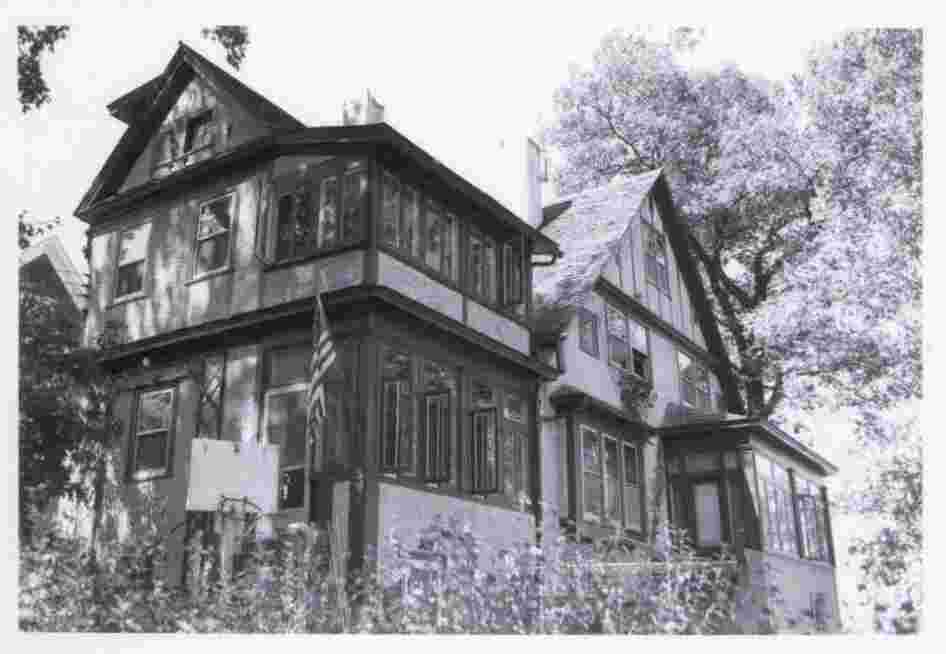
My sister Kristi had asthma so bad that she was on a first-name basis with the emergency room nurses in three different hospitals. The doctors told us that Kristi was supposed to live in a spartan, dust-free environment. No pets, no carpets, no kapok. For that matter, no peanut butter, no chocolate, no dairy products, no seafood. No swimming in the lake, no proximity to mowed grass, no undue stress or excitement.
Fat chance. The house alone was a minefield of potential asthma inducers. It wasn't just the mold-retaining Javanese wall hangings or the dust gardens that surrounded the seashell collection. It was my parents'-especially my father's-penchant for hoarding every tidbit of junk that had ever floated through their daily lives. Used paper bags, empty milk cartons, shoelaces, toy soldiers with one leg, bits of string, bicycle parts, bent coat hangers, limbless dolls, egg cartons, back issues of National Geographic, single spark plugs, driftwood and rusty cans, a perfectly good toboggan missing only a central slat, outdated maps of Central Europe and the Fiji Islands, odd-sized colored paper, language guides for Swahili and Turkish and Urdu, Twenties' style trench coats and left shoes, decks of cards that totaled 46, burnt-out toasters, kites without tails, stuffed bears without heads, a birch bark canoe, three spoked wheels from a baby carriage, crumpled art projects from the first grade Christmas play and every book ever printed. Day by day, year by year, the clutter accumulated in the downstairs foyer, in the back closet, down in the basement, up in the garage roof rafters, under my parents' bed, inside cabinets, on shelves and kitchen racks. In time, entire rooms disappeared from use.
Kristi's bed was moved into a hallway closet across from Cal and Brian's room. The closet was stripped bare, sealed with some sort of anti-mold compound and transformed into a bubble of Scandinavian design and partly-filtered air. The rest of us lived on in the growing clutter, making pathways through the temporarily-stored boxes and piles of recent discoveries that had been just too tempting to pass up.
My brother Roger used to scream about the mess every now and then, but Kristi struggled on despite it, finding solace from her fight for air in a private world of dreams that bound her, like my father, to the house and its forking paths of possibility. Where my brothers and I bounced and jumped through our house in permanently mud-grimed sneakers, she moved with tiny steps, as if there were flagstones set along the floors and she had to touch each one. In her favorite red-strap shoes-which she wore only on Sundays or special occasion-she hardly seemed to touch the floor at all. She just floated above it, petticoats rustling and pigtailed Pippy Longstocking cradled limply in her arms. With the sun behind her, or the angle right from the room lamps, her wispy blonde hair-failed ringlets and all-looked like a halo hanging slightly askew.
But angelic comparisons don't do her justice. They overlook her toughness: a deep, interior toughness honed early in her battles for breath. There was the cornucopia of medicines-pills, syrups, plastic inhalers-lining the top of her dresser. There were the midnight dashes to the emergency room on frozen winter nights. There was the refusal to stay quiet and be waited on, so long as she could gulp and sniffle and pump those fragile lungs. Sometimes at night, when I listened to her struggle to breathe, I heard the deep chest wheeze as a foghorn sounding out over the lonely seas, calling the ships of air to port.
Maybe my dad heard it too, dreaming, as he was, of a return to his vanished sailor's life. He'd have been laughed at for chasing that dream (though he was to make it come true in time), but then he'd been laughed at all his life for his refusal to do anything the conventional way.
The flat, exterior failures of my father's work life-which were many and varied-never seemed to diminish his enthusiasm for what others would have called impossible dreams. My father always loved things that were too rundown, or complicated, or sure-bet financial catastrophes for anybody else to have the temerity to tackle.
When we lived in Wisconsin he ran a newspaper, but that floundered on the shoals of insolvency-even though he worked a hundred hours a week-because he wouldn't take cigarette or liquor ads. Later, after we'd moved to Minnesota, he bought a second-hand semi and started trucking coast to coast. He set his brakes on fire going down the Donner Pass; landed in a Georgia jail in a controversy over local permits; and finally had to leave the truck in the Cleveland rail yards when some union goons impounded it for overtime pay.
Then came the printing plant. Someone else might have contented themselves with carving out a quiet niche in the trade, but not Dad. He hired recovering alcoholics and untrained foreign students from the U of M as pressmen, and bought year-old paper stocks that were starting to curl. The linotype machine was pre-war and had to be smacked just in a certain place every time you needed to use a "Z." Dad's peak of highest energy always seemed to come after a twelve hour shift when the chainsaw-rattling from the underside of a boxcar-sized press preceded a sudden scrunch of paper roll and you knew beyond any doubt that tomorrow morning's absolute, final offer deadline could never possibly be reached. That's when he'd decide to invent his own jury-rigged double-box feeder system, which could actually work at about quarter-speed so long as some likely chump could be found to stand behind it, feeding paper edges into the maw of moving bits.
And beyond all this, in the hidden recesses of his heart, was still the other, the deepest dream: endless sketches of ships' riggings, neatly stacked piles of maps and charts, a guidebook to the harbors of the Windward Islands... Despite whatever life threw at him my father moved forward, aiming for the sea. So that even as his business ventures floundered, his dreams, like mine, were buoyed on the surface by the countervailing weight of the choices that existed-even if only implicitly-inside the bonds of our family home.
But in my dreams I never wore second-hand cuffless pants or last year's beat-out tanker jacket. My shoes didn't look pointy and down at heel. In my dreams I could buy a school lunch any day of the week, treat my friends to cherry cokes at Bacon Drug's soda fountain counter and toss pennies in the lake. In dreams, Mom got new clothes (even shoes that actually fit) and Dad drove home in a roadster, not a re-assembled collection of cadged spare parts. My brother Roger got his baseball glove restrung-right this time, by a professional-and Kristi went to Mayo where they worked a miracle cure.
In dreams, Calvin got a doctor who could straighten his twice-broken collarbone and never came home in tears because his classmates teased him about his mis-matched crayon collection-all half-lumps saved from Roger and Kristi's first grade sets. No one called him "Hayseed" because his socks didn't match and Rog's old pants only came halfway down his shins.
And Brian, the youngest (half-monkey by most accounts), never had to wonder why we couldn't get treats at Excelsior Amusement Park. Instead, he bought two of every kind from Hildie's caramel corn stall and found a bike-a two-wheeler whose handlebars actually sat on straight-to race along behind the others when they were gunning for the park.
Was this so small? To want the simple things whose absence ate away at childish hearts? Sometimes I wasn't so sure. Sometimes (say, at Eddie Dibbs' place, when his old lady was hitting the bottle, or with Luke the Spook when it was time for the Boy Scout Father-and-Son Banquet) I could feel the haunting of other pangs; deeper losses whose pain would never be my own. But did that mean that my own pain must be denied? Isn't such denial the beginning of dream's demise?
My father followed every side turning, every hint of unplowed pathway: a charter of ungoverned seas. To be sure, he paid the price for that-as did we all, our family band-but which of us would have wished him tamed?
In my father's dreams were worlds transformed. Some we worked and played in. Some had not yet been built, but already their tracings could be seen against the sky: a counter-universe that shimmered just inside the edge of hope. It was that edge that filled my heart with a spirit so large I could not draw breath, but lay, like Kristi, gasping in its grip. The hound of heaven, my mother called it, and likely she had it right. But this much I know: The way to heaven may be straight and narrow, but the path we walk to get there is never that...
© 2006 by Daniel Gabriel.