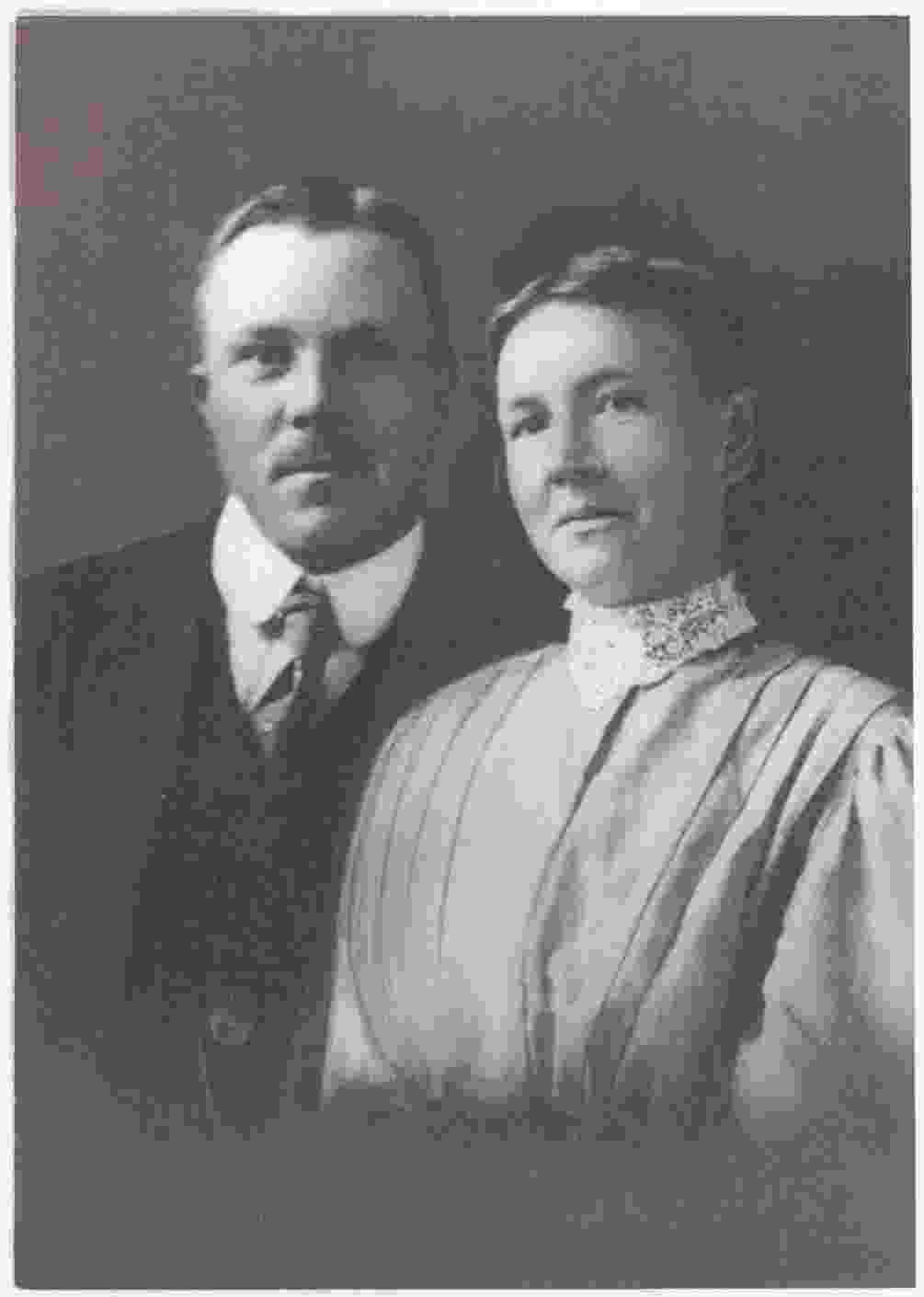
Anna Swanson, my grandfather's mother, died of pneumonia in 1893. The family had intended to develop a farm on their eighty acres of land a mile east of Milaca, Minnesota, purchased by my grandfather at age eighteen in 1888. But without Anna's help and support, the Swanson men-John (my grandfather), Swen (John's father) and Gust (John's brother)-wondered what they might do now. What would be a reasonable direction for them to take?
Grandpa had killed the pig that was badly burned when the forest fire passed through. Should they raise another pig? There was no reason to purchase more cattle. Anna was no longer there to milk the cows and churn the cream for butter to sell at the grocery and dry goods store in Milaca. If they cleared more land for a field, what would they plant? Years back, the men prepared a few acres to grow hay for the two cows and the oxen but the current drought gave them precious little yield. Still, several chickens that Anna had raised from chicks laid eggs for them to eat. They would continue to grow potatoes, always a staple in a Swede's diet, set out tomato plants, maybe add easy to grow squash-but who knew how to prepare them for eating?-keep the strawberry patch going. And let the rest of the garden fall to weeds.
The men continued to work at the Foley Bean Lumber Mill in Milaca and they continued to burn tree limbs and stumps left from the logging on the land Grandpa had purchased. The contract had stated that if not enough snow fell during the next three winters for the huge logging sleds to slide through the woods and haul out the logs, the eighty acres of land and the oaks and pines were Grandpa's. But this was not to be. The second year after purchase, there was heavy snowfall. The lumbermen sawed down all the trees, even saplings that might make a few laths. Tree limbs were left where they fell. An army of oak and pine stumps dotted the eighty acres. Now the land was Grandpa's.
But the men made no changes in their routine and they took their days as they came. Then one spring morning in 1895, Grandpa reached into the shed for the shovel and the ax and headed out to his promised land. A piece of his world was about to change.
A long time sailor and part time horse trader, Andrew Peterson gave up the sea. Planning to farm, he emigrated from Sweden to the United States in 1885. His wife, Christine, and their foster daughter, Mathilda, aged fifteen, joined Andrew in 1890 on his rented farm in Carver County near Jordan, Minnesota. The next year, Mathilda left the Peterson household and went to work in Minneapolis. By now Mathilda understood English quite well, but spoke the language poorly. She was paid two dollars a week to do all the housework for a family who had no knowledge of Swedish.
The Petersons wanted a farm of their own, but acreage in Carver County was too expensive for them to purchase. In his search elsewhere, Andrew located and bought forty acres of timbered land near Milaca, a couple miles east of the Swanson farm. In the spring of 1895, they loaded their household goods and machinery into half of a rented railroad boxcar to be shipped to Milaca, a distance of about 115 miles.
Andrew and Christine set out in a one horse buggy with a seat that had sitting space for two, their colt and heifer tied behind. They went through Minneapolis on Hennepin Avenue and picked up Mathilda, who had arranged a leave from work to help them get settled. Christine, a bit pudgy, took additional space with the several slips she always wore under her skirt and the three or four shirts and sweaters under her coat. Andrew likely gave the reins to Christine, hopped out of the buggy and walked with the animals now and then to loosen up his joints and give the women more room.
The Petersons traveled out of the city via Lyndale Avenue, then northward into the countryside on a gravel road designated Minnesota Sate Highway 169, stopping at farms for the night where they and the animals found some needed rest.
Reaching Milaca, they turned from the main road through town and headed east towards the forty acres Andrew had purchased. Winter was still thawing out. Much of the gravel on the road had meshed with the clay soil, making travel difficult on the bumpy, muddy tracks. A mile out of town they came to a low stretch of road where the buggy became hopelessly mired in mud.
John Swanson, busy clearing around the tree stumps to get them ready for burning, heard a commotion, saw the Petersons' plight and went to help them. In a struggle that can well be imagined, Swanson shoveled, the Petersons pushed, the horse pulled, and the buggy sputtered to firmer ground.
John removed his crumpled, sweat-stained felt hat, ran his fingers through his soft sandy hair and introduced himself to stately, auburn, twenty-year-old Mathilda.
"De kalla mig Mattie," she told him in Swedish.
And Mattie she was-until the children began calling them "Ma" and "Pa". And she and he became Ma and Pa to each other, too.
© 2006 by Doris Bergstrom.