Over the last few years, I've felt perfectly at ease writing stories that reveal my sister's weird and sundry psychosomatic illnesses and my girlfriends' husbands' sexual aberrations, because nobody around here was going to be reading the literary reviews in which I hoped to place my work, and to the people in my hometown a Pushcart Prize sounds like something you might get for successfully putting yourself before the horse. The prospect of getting a book published always seemed so far away that I never worried about my 91-year-old grandfather holding my hardcover edition in his hands and reading the several descriptions of blow jobs.
"I look forward to reading that book of yours," says Grandpa, my mother's father, who often quotes to me from Oliver Twist. Only once has he read a story I've written, one about a man who loved his truck, a story I let him see because it contained no sex acts, though the protagonist lusts after his neighbor's pregnant wife throughout. "You're a good writer," concluded my grandfather, "but I'm not interested in the people you write about. Now Oliver Twist and that awful beadle and Fagin and that poor girl Becky," he said, "that's somebody to write about."
"And what about Charlie Bates," I added. "Don't forget Master Bates." I said, and then laughed to myself, hah!
I visited my aunt and uncle, Linda and Jim, on their Michigan farm. They recently closed down their hog operation and now merely plant and harvest eleven hundred acres of corn and soybeans. "Nice book," Aunt Linda said. The jacket features a woman sitting down to eat a little man.
"Did you read it?" I asked.
"No, but your Uncle Jim read it. That's the first book I've ever seen Jim read all the way through, since I've been married to him." Jim is my father's brother.
I brightened. "So, Jim, you liked it?"
"Oh, I was just curious."
"Curious about what?"
"Oh, I was just curious what you'd say." Jim talks kind of slow and he has ears that are small and round and protrude way out from his head. He said, "I have an idea all this stuff is true."
"Well, no," I said. "For instance, I have never turned into a gorilla." Then I blushed. There are no blow jobs in "Gorilla Girl" but there is some lively self-pleasuring.
Jim continued: "I mean, I know your ma took you to the dump with her, like in that story. I'll bet while she wasn't looking you did stand on the cab of her truck-all kids do that. Drives me crazy when kids do that."
"The New York Times liked the book," I offered.
"Those people in New York probably don't realize this stuff is all true."
"Really, Jim, it's not all true. Not even most of it."
"Oh, you keep telling the New York people that." He nodded his head up and down so long that I too began nodding my head up and down.
The conversation then moved with deafening speed to the topic of ear wax, and Jim explained how during the harvest, when there's all that dirt and chaff flying around, he'll end up with a chunk of ear wax as big around as a pencil. "But not as long as a pencil," Jim said.
The Kalamazoo Gazette review of my book began with the (male) reviewer saying that when he picked up the book, he felt as though he'd "opened the door to the wrong rest room." I didn't mind, however, since the accompanying article featured a photo of me with my three-legged dog Re-bar, lounging in a pile of autumn leaves, and I appeared deceptively beautiful and young in the photo. Though I want to be appreciated for my timeless prose, I don't mind if people think I look fresh and lovely while I'm creating it.
Two days later I got a card from my teaching supervisor Norma VanRheenen. "Congratulations on the book, but I don't know about that sex kitten photo."
When I offered to do a "reading or signing or something" for my local independent bookstore, the publicity gal at John Rollins Books suggested I read for a writers group which would be meeting in the store's cafe three days before Christmas. As I was reading the second paragraph of a 5000 word story, I noticed that "Little Susie Snowflake" was playing over the intercom system, and not so quietly. While I was reading the sixth, seventh, and eighth paragraphs, the man behind the cafe counter steamed a pitcher of milk. As I turned the fourth page, I calculated the median age of the people in the audience to be about sixty-eight and I began to question my decision to read one of the stories with a blow job in it. As I read the part where the manager of a regional sales office pushes a woman's head down into his lap, the guy sitting next to my supervisor Norma wrote something in his pocket notebook. I forged onward, through "Frosty the Snowman", "Jingle Bells", "Rudolph the Red-Nosed Reindeer", through four espressos and what I think was a mochaccino.
After the reading, Norma told me what the man beside her had written in his notebook: "Sleazy Stuff." And apparently at various points in the story, he underlined the phrase. Norma, a world-class grammarian, also kindly pointed out that my book contained a typo-the beer is "Natural Light" not "Natural Lite."
On the day after I received my first box of books from the publisher, I took one to the Galesburg Memorial library. "Oh, by the way," the librarian said, "how's the language in here?"
"Um. Good," I said. "See, look, I won an award." I pointed to the place on the book where it says I won an award. Galesburg, by the way, is the home of Jack Kevorkian's erstwhile partner in euthanasia Dr. Georges Rene Weber, who is now rumored to be hiding in Brazil.
"Much swearing?" the librarian asked.
Was "blow-job" a swear word? "Not much swearing," I said.
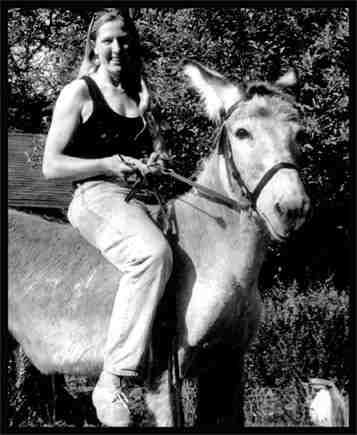
I called my mother and asked her what she thought of my book. "Well, it's great that you're a famous writer and all that, but I could really use some help medicating this damn donkey. And four months ago you promised to help me drag this furniture outside so we could burn it."
"Sorry, Mom, I'll come drag it out this week."
"Well, there's a lot of stuff in the garage now," she said. "We're going to have to take a scrap metal run before we can get to that furniture. And if we're going to the metal shredder, we have to take that busted swing set. It's frozen to the ground but maybe we can pull it out from under the ice with the four-wheel drive truck."
Over the last three months, my sister Sheila has sold my book to no fewer than thirty people at Borgess Hospital where she works as a phlebotomist. I asked her how she liked the book.
"Oh, I haven't had much time to read lately, you know with Thanksgiving and Christmas and now Easter's coming up. Did I tell you what happened yesterday with my irritable bowel?"
The fundamentalist Christian who runs my local grocery store read my title from the newspaper article. "Women & Other Animals, eh? These must be stories for children."
The cost of having a book published surprised me. I mean, everybody assumes that you get a truckload of free copies; I got ten free books from University of Massachusetts Press. Nonetheless, my natural cheapskatedness gave way to my inclination toward self-promotion and I found myself giving them away to everyone, handing them out as though I had a tenured teaching position and an NEA grant. When I got hold of myself, I decided to limit the freebies to one a day. Later I calculated that giving away one a day would cost me $5,657 per year.
When I took my 1985 VW Golf to my mechanic to get a new heater blower motor, Kirk, as usual, stood back and marveled that my car was still running at all. Then he asked me for a free book. I suggested that he should fix my car for free rather than the usual fifty dollar an hour labor charge. But I know it is only a matter of time until I give him a copy. I already see myself inscribing it: "Thank you, Kirk, for keeping my sorry ass on the road." And the next time I see him at The Corner Bar, I'm not going to ask him how he liked the book. I'm just going to move past all that and ask him straight out if he can't cut me a deal on some junkyard front struts and maybe just maybe can he get that left rear door to open again? Now that would be pure poetry.
© 2008 by Bonnie Jo Campbell.